Beyond Search Bars: How to Optimize Your Brand for Autonomous AI Shopping Agents in 2026
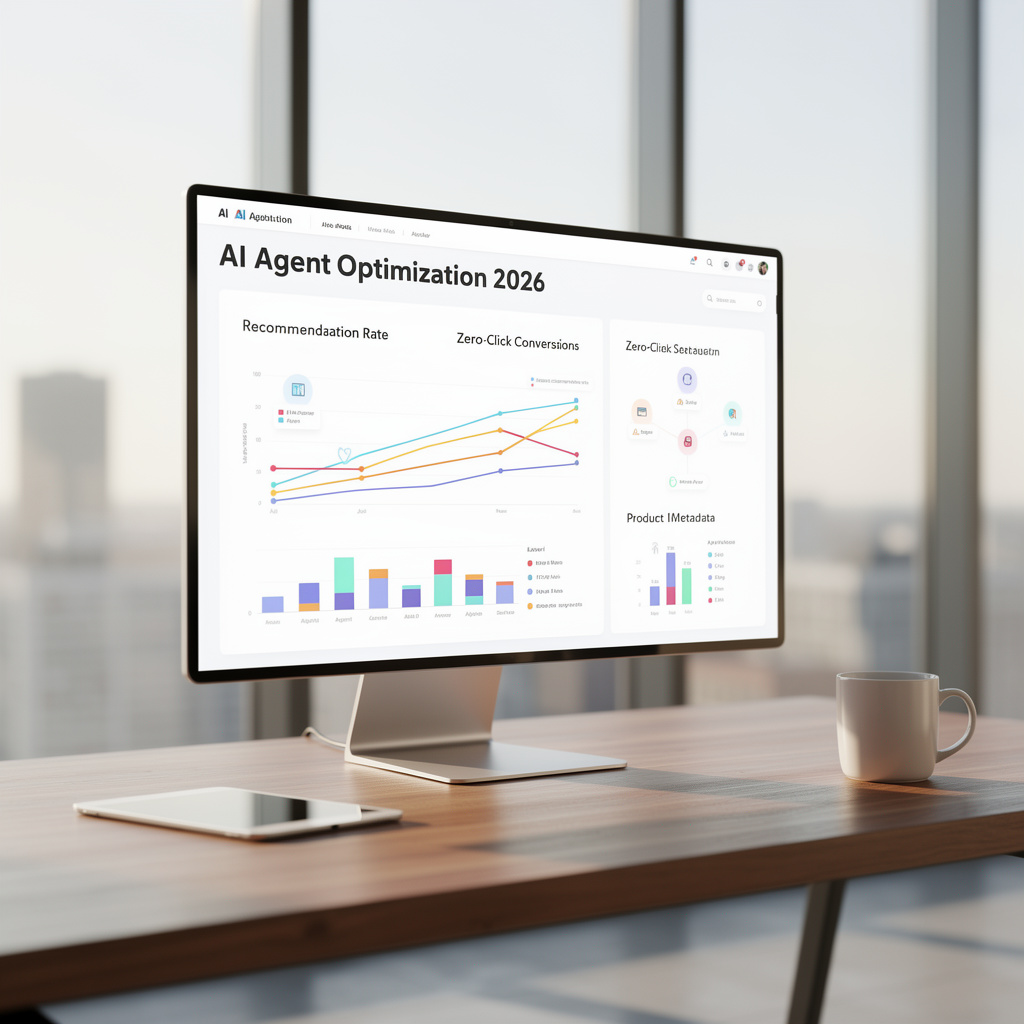
As consumer purchasing shifts from traditional web search to autonomous AI shopping agents in 2026, traditional SEO is no longer enough. Learn how to structure your brand data and digital footprint so AI agents prioritize and purchase your products.
Beyond Search Bars: How to Optimize Your Brand for Autonomous AI Shopping Agents in 2026
Category: SEO | Tags: Generative Engine Optimization, AI Shopping Agents, SEO 2026, E-Commerce Strategy
The modern consumer journey has undergone a fundamental paradigm shift. The days when shoppers typed keywords into a search bar, clicked through three blue links, and manually filled out checkout forms are rapidly fading. Today, autonomous AI shopping agents act as digital concierges—handling product discovery, specs comparison, price negotiation, and order execution without human intervention.
When an AI agent makes a purchasing decision on behalf of a user, it does not care about persuasive sales copy, eye-catching hero banners, or traditional backlink profiles. It evaluates structured data, real-time API reliability, algorithmic consensus, and machine-readable proof of value. To remain competitive, e-commerce brands must shift their digital strategy from traditional Search Engine Optimization (SEO) to Generative Engine Optimization (GEO) and Agentic Commerce Engineering.
The Architecture of Agentic Purchasing
To optimize for autonomous agents, you must first understand how they evaluate your brand. Unlike human users who browse visually, an AI shopping agent executes a series of multi-step programmatic checks:
- Intent Deconstruction: The agent translates natural language user prompts into high-dimensional vector embeddings, identifying parameters such as constraints, preferences, delivery windows, and budget.
- Entity Retrieval & Graph Traversal: The agent queries structured knowledge graphs, search engine indexes, and direct API networks to identify product entities matching the query.
- Consensus Vector Verification: The agent scrapes and synthesizes thousands of unstructured data points—from community discussions to expert benchmarks—evaluating sentiment, defect rates, and brand reliability.
- Real-time API Probing: The agent pings merchant endpoints to verify stock availability, exact variant shipping times, and real-time pricing.
- Automated Transaction Execution: The agent interacts with standard merchant endpoints to securely finalize the purchase using cryptographic tokens.
If your brand lacks machine-readable clarity at any step of this process, the agent bypasses your inventory entirely in favor of an optimized competitor.
Key Strategies for Agent-First Optimization
1. Structure Brand Infrastructure with Extended Schemas
Standard Schema.org markup is no longer optional—it is the baseline syntax for machine readability. However, optimizing for autonomous AI shopping agents requires moving beyond basic product schemas toward comprehensive entity knowledge graphs.
- Implement Deep Product Schema Markup: Go beyond name and price. Specify micro-attributes, material composition, sustainability index scores, exact dimensional tolerances, and direct compatibility standards.
- Expose Dynamic Availability Data: Use structured schema properties that dynamically reflect stock status at regional levels rather than static global declarations.
- Publish Machine-Readable Business Logic: Standardize return policies, warranty details, and shipping SLA data using explicit schema markup so agents can compute overall offer value accurately.
2. Standardize Agentic Commerce Protocols and Open Endpoints
Agents favor merchants that reduce transaction complexity. Exposing machine-friendly endpoints drastically reduces computational friction for the purchasing AI.
- Deploy Agentic Endpoints (
/llms.txtand.well-known/agentic-commerce.json): Provide a structured manifest file at your root directory that lists API capabilities, catalog endpoints, search parameters, and checkout capabilities designed specifically for AI models. - Provide Deterministic API Responses: Ensure your backend returns clean, structured data payloads (JSON-LD or RESTful outputs) when hit by recognized AI agent user-agents, minimizing payload overhead and parsing errors.
- Adopt Delegated Tokenized Checkout: Integrate emerging zero-friction payment protocols. Allowing AI agents to execute transactions via scoped, single-use payment tokens reduces cart abandonment during programmatic purchasing.
3. Master Synthetic Reputation and Sentiment Vectoring
Autonomous agents rely heavily on broad consensus analysis to validate product quality. They are largely immune to polished marketing copy; instead, they evaluate millions of unfiltered consumer sentiment signals.
- Monitor Third-Party Community Sentiment: AI models evaluate discussions across niche forums, Reddit, specialized review aggregators, and social channels. Focus on genuine product reliability, as recurring defect complaints cited in discussion threads directly lower your product's probability ranking in AI decisions.
- Align Citation Footprints: Ensure product details, specs, and brand claims are consistent across third-party distributors, review sites, and digital publications. Discrepancies generate uncertainty scores within an AI agent's reasoning matrix.
- Manage Negative Data Vectors: Address systemic product complaints directly. When an AI agent scans historical review trends, updated merchant resolution logs can mitigate sentiment penalties.
4. Optimize for Algorithmic Value and Total Cost Evaluation
AI agents calculate a holistic value score based on hard data points rather than emotional appeal.
- Transparent All-In Pricing: Agents calculate the total cost of ownership—including item cost, taxes, shipping fees, and potential return costs. Hidden fees disclosed late in the checkout workflow trigger instant agent rejections.
- Fulfillment Speed Vectoring: Shipping speed is weighted heavily in real-time purchasing decisions. Clearly index exact regional fulfillment speeds so agents can meet user-specified delivery deadlines.
Tactical Action Plan for E-Commerce Leaders
To audit and upgrade your brand's readiness for autonomous agent shopping, execute the following step-by-step roadmap:
| Phase | Priority Action | Success Metric |
| :--- | :--- | :--- |
| Phase 1: Knowledge Graph | Audit Schema.org implementations; remove data ambiguities across canonical URLs. | 100% schema validation without warnings on core catalog. |
| Phase 2: Endpoint Deployment | Publish standard /llms.txt and agentic commerce manifest specs. | Verification of agent crawl access and successful API probes. |
| Phase 3: Sentiment Alignment | Analyze brand mention vectors across community platforms for entity consensus gaps. | Reduction of negative sentiment flags in major AI model outputs. |
| Phase 4: Agent Checkout Setup | Enable agent-compatible API checkout protocols and cryptographic token processing. | Successful automated test-purchases by simulated AI buyers. |
The New Competitive Advantage
As autonomous shopping agents handle an increasing share of consumer commerce, the brands that thrive will not be those with the biggest advertising budgets or the most persuasive visual branding. Success belongs to the brands that provide the most accurate, accessible, and frictionless digital infrastructure for machine evaluation.
By transforming your e-commerce ecosystem into an agent-friendly, data-rich environment, you position your brand to win in a market where the primary customer is no longer a human eye, but an intelligent algorithm.
Ready to Scale Your Brand?
Our team of experts can help you implement these insights and drive real results.