Beyond the Blue Link: How to Optimize Your Brand for Gemini and Perplexity AI Search in 2026
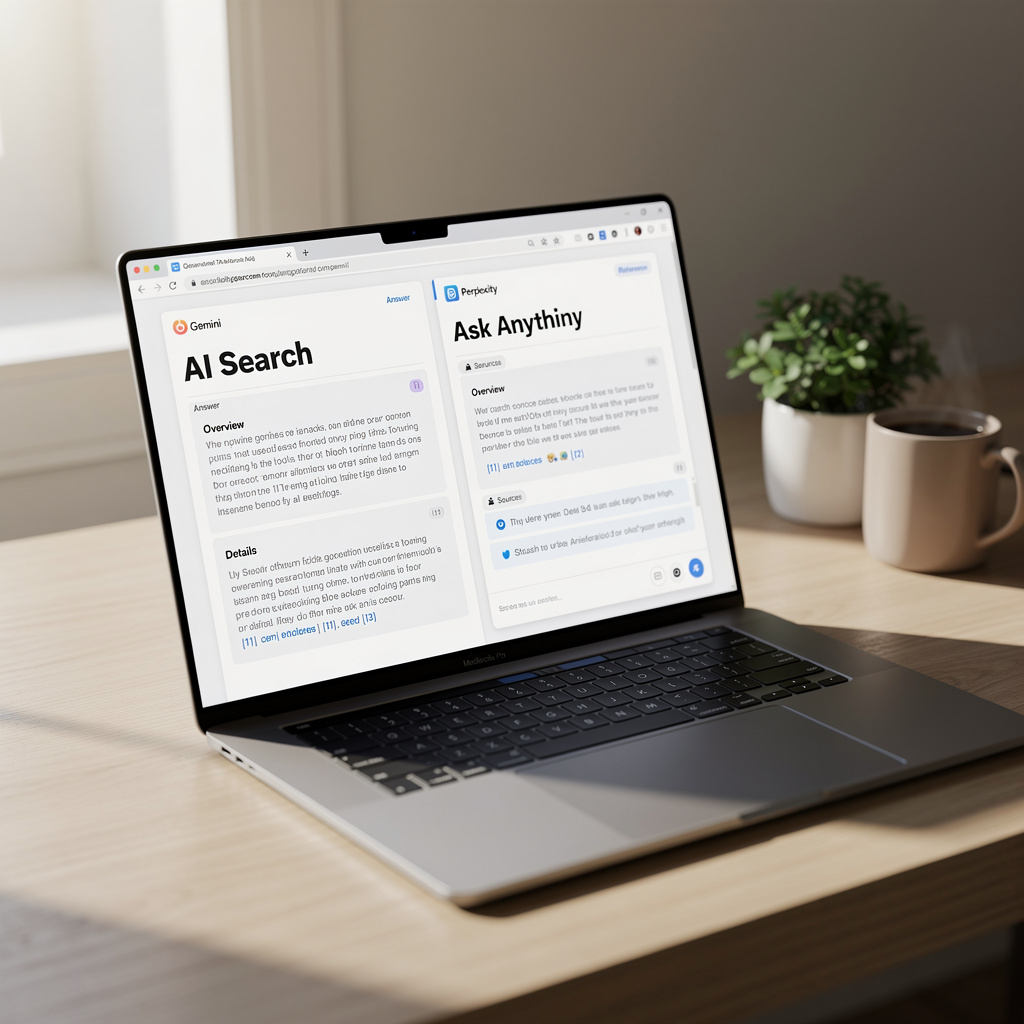
As traditional search engines give way to conversational AI agents, static keyword strategies no longer cut it. Discover how to format your brand's digital footprint so LLMs cite you as the definitive source in 2026.
The New Era of Search: Securing Your Brand's Authority in the Age of Conversational Agents
The digital landscape has fundamentally transformed. The era of the "ten blue links" is officially a relic of the past. Today, in 2026, search is no longer about navigating a list of directories; it is about conversational synthesis. Users do not want to hunt for answers across multiple open tabs—they expect their AI assistants, primarily Google's Gemini and Perplexity AI, to digest, synthesize, and deliver a single, flawless, definitive answer.
For brand marketers and SEO professionals, this shift requires a complete rewiring of our playbook. Traditional search engine optimization (SEO) has evolved into Generative Engine Optimization (GEO) or Large Language Model Optimization (LLMO). If your brand is not structured to be easily parsed, trusted, and cited by these advanced LLMs, you do not exist in the consumer’s decision-making funnel.
Here is how to optimize your brand’s digital footprint so conversational engines cite you as the definitive authority.
Deciphering the Giants: Gemini vs. Perplexity
To optimize for these systems, we must first understand how they process and retrieve information. While both operate on advanced neural networks, their retrieval architectures prioritize different signals.
Google Gemini: The Ecosystem Synthesizer
Gemini is deeply integrated into the world's most ubiquitous ecosystem. It doesn’t just pull from the open web; it cross-references Google Maps, YouTube, Google Workspace, and Android’s native system intelligence.
- Retrieval Style: Gemini relies heavily on Google's Knowledge Graph. It prioritizes entities (brands, people, places) that have clear, verified relationships.
- Core Preference: It favors content that demonstrates deep topical authority, structured entity data, and seamless integration with multi-modal inputs (like video and audio).
Perplexity AI: The Real-Time Research Agent
Perplexity behaves more like an academic researcher on fast-forward. It is designed to find, evaluate, and cite the most current, high-utility source material available.
- Retrieval Style: Perplexity conducts real-time web index sweeps, prioritizing structured lists, comparative data, and unbiased, objective reporting.
- Core Preference: It values transparency, authoritative data tables, direct answers to complex "how-to" queries, and neutral, non-marketing language.
The Three Pillars of Generative Engine Optimization (GEO)
Optimizing for AI engines in 2026 requires shifting from keyword-stuffing to entity-building. Here are the three fundamental pillars you must implement today.
1. Build an Impeccable Entity Footprint
LLMs do not see your website as a collection of pages; they see your brand as an "entity" with associated attributes. To strengthen your brand’s entity footprint:
- Deploy Advanced Schema Markup: Go beyond basic Article or Product schema. Utilize
Organization,SameAs(linking to verified social profiles and Wikidata), andBrandschemas. Ensure your schema declares relationships explicitly (e.g., who your founders are, what products you manufacture, and which industries you serve). - Secure Third-Party Verification: LLMs build trust by cross-referencing. If your website says you are the "leading enterprise CRM," but Wikipedia, Reddit, G2, and industry publications do not corroborate this, Gemini will ignore your self-proclaimed status. Aim for unbranded mentions on high-authority platforms.
2. Optimize for Retrieval-Augmented Generation (RAG)
Modern AI search engines use RAG to fetch external data before generating a response. If your content is buried behind interactive JavaScript, complex paywalls, or unstructured layouts, the RAG pipelines will bypass you.
- Format for Chunkability: Write in clear, modular sections. Use descriptive H2 and H3 tags that frame questions directly. Underneath, provide a concise, 2-3 sentence direct answer, followed by deeper supporting context. This makes it incredibly easy for an LLM to "chunk" and extract your content for its conversational output.
- Publish Raw Data and Synthesized Insights: AI agents love structured data. Include clear, downloadable tables, bulleted summaries, and well-labeled charts. A table comparing industry metrics is highly likely to be extracted as a direct citation by Perplexity.
3. Cultivate Sentiment and Brand Advocacy at Scale
When a user asks Gemini, "What is the best project management software for remote marketing teams?", the model does not just look at search rankings. It scans user reviews, forum discussions, and social sentiment.
- The Forum Influence: Platforms like Reddit and Quora are heavily weighted in LLM training and real-time retrieval. Monitor and participate in these communities. Real, organic discussions about your product act as powerful trust signals for AI agents.
- Maintain a Clean Review Profile: Aggregator sites (Trustpilot, Capterra, etc.) must show consistent, positive, and detailed user feedback. LLMs are smart enough to detect boilerplate, fake reviews; they look for nuanced, detailed descriptions of specific features and use cases.
The Actionable Brand Playbook: Getting Cited in Conversational Answers
To transition your strategy from theoretical to practical, implement these specific content development guidelines:
- Adopt an Authoritative, Neutral Tone: LLMs are trained to avoid marketing hyperbole. Phrases like "revolutionary, game-changing solution" are filtered out. Instead, use objective, matter-of-fact language: "Our software reduces database latency by 40%, as demonstrated in our peer-reviewed latency study."
- Create Dedicated 'AI-Readiness' Resource Hubs: Designate a section of your site filled with clear, highly factual definitions, APIs, and documentation. This act of "Direct-to-Agent" (D2A) publishing ensures that when an AI is looking for technical specifications about your industry, your hub is the most structured source.
- Solve the 'Zero-Click' Dilemma with Direct CTA Integration: If Gemini synthesizes your article and displays it to the user, how do you get traffic? By ensuring your brand name is uniquely tied to proprietary terms, frameworks, or tools. If you invent the term "The Velocity-First Content Framework" and register it as an entity, the LLM must mention your brand when explaining the concept, driving high-intent users to search for you directly.
Multi-Modal Optimization: Video, Voice, and Visuals
In 2026, search is no longer text-only. Gemini’s ability to analyze video frames and audio natively means your rich media must be optimized for machine vision.
- Video Transcription and Chapters: Provide highly detailed, time-coded transcripts for all video content. Ensure your speakers clearly articulate key concepts and definitions verbally.
- Descriptive Image Alt-Text: Move beyond simple alt-text. Write comprehensive descriptions that explain the data or relationship shown in an infographic, allowing the LLM's visual processing layers to read and index the graphic's value.
Beyond CTR: Measuring "Share of Model" (SoM)
Traditional metrics like click-through rate (CTR) and keyword rankings are losing their utility. In this new paradigm, your primary metric is Share of Model (SoM).
- Track LLM Mentions: Use emerging AI analytics tools to query Gemini and Perplexity daily with key transactional prompts (e.g., "What are the top enterprise security platforms?").
- Analyze Citation Frequency: Calculate the percentage of times your brand is cited as a source compared to your competitors.
- Monitor Sentiment Vector Shifts: Track whether the LLM’s synthesized summaries of your brand are shifting from neutral to positive, or if negative reviews are skewing the model's perception.
The Road Ahead
Winning the search game in 2026 requires letting go of the obsession with securing the number one organic spot on a desktop browser. Instead, focus on becoming the most trusted, structured, and cited node in the global neural network. By formatting your data for machine consumption, maintaining a pristine digital reputation, and building clear entity relationships, you ensure that when the world asks the leading AI agents for a recommendation, your brand is the only logical answer.
Ready to Scale Your Brand?
Our team of experts can help you implement these insights and drive real results.