GEO Blueprint 2026: How to Optimize Your Brand for Generative AI Search Engines
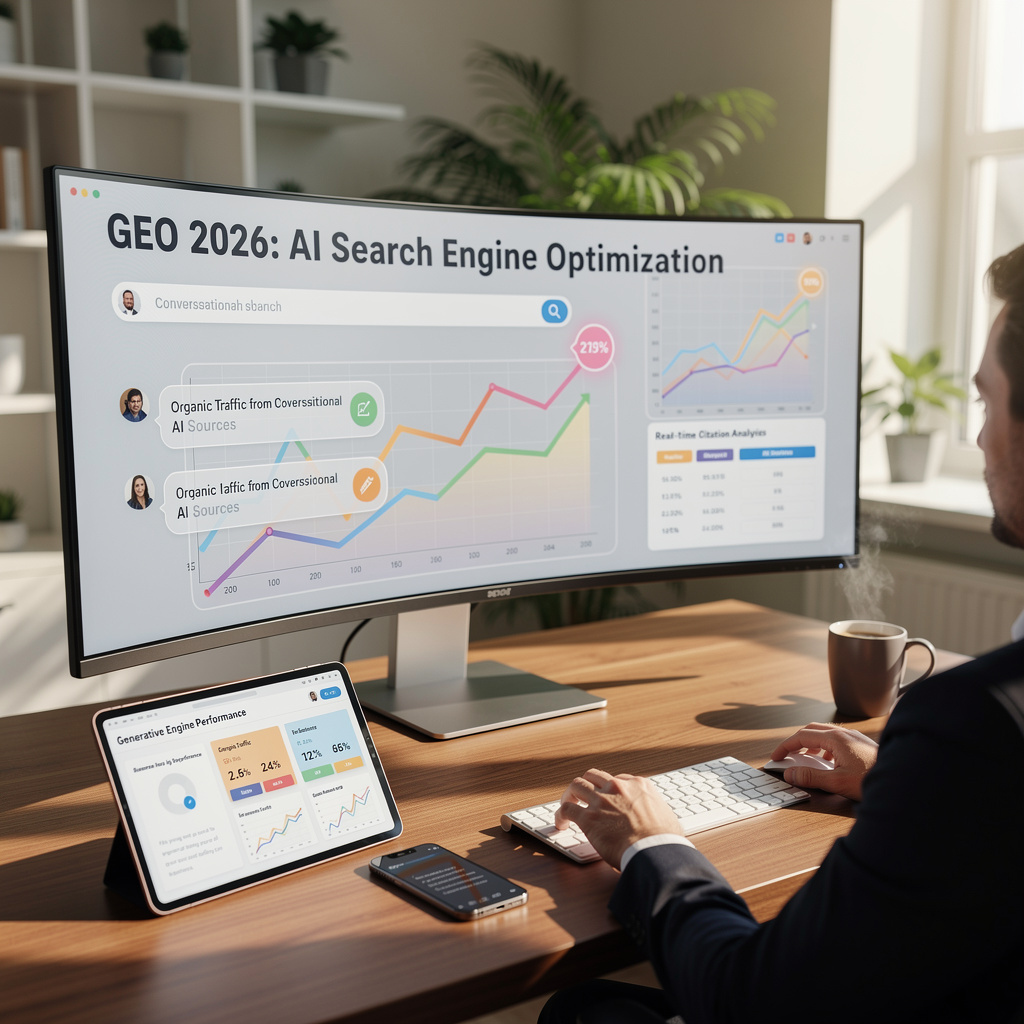
As traditional search result pages give way to direct conversational AI answers, businesses must pivot to Generative Engine Optimization. Discover the concrete strategies needed to ensure your brand is cited and recommended by next-generation AI models in 2026.
The Evolution of Discovery: From Blue Links to Conversational Synthesis
We have officially crossed the threshold where search engines no longer merely point to information; they synthesize it. The classic Search Engine Result Page (SERP) of the past decade has evolved into a highly interactive, personalized interface powered by agentic AI search. Today, users do not construct disjointed query strings in hopes of finding the right link. Instead, they interact with conversational interfaces that understand context, intent, and multi-step reasoning.
For brand managers and digital marketers, this shift changes the definition of visibility. It is no longer enough to rank in the top spots of a traditional search index. The new gold standard is securing a primary citation within the synthesized answers delivered by generative engines. This is the domain of Generative Engine Optimization (GEO).
Understanding the Retrieval-Augmented Generation (RAG) Paradigm
To optimize for generative search, we must first understand how these systems retrieve and present information. Modern search engines use Retrieval-Augmented Generation (RAG) to ground their expansive language models in real-time, verified web data. This architecture operates in three distinct phases:
- Retrieval: The system translates the user's conversational prompt into a vector query, searching its real-time index for the most relevant documents.
- Filtering & Ranking: The engine analyzes retrieved snippets based on credibility, information density, and semantic alignment.
- Generation: The model synthesizes these snippets into a single cohesive response, appending inline citations that link back to the source material.
If your content fails to pass the rigorous filtering and ranking phase, your brand remains invisible. To succeed, your digital footprint must align with the algorithmic preferences of these advanced neural networks.
The Core Pillars of a Generative Engine Optimization Blueprint
1. Optimize for "Information Gain" over Word Count
For years, SEO focused on content length and keyword frequency. In the current generative landscape, these metrics are obsolete. Generative engines are designed to reduce redundancy. If your article simply rephrases existing web consensus, the algorithm will ignore it; the LLM already knows that information.
Instead, prioritize Information Gain—a metric that measures the unique value, data, or perspective your content introduces to the web ecosystem.
- Publish Proprietary Research: Run original surveys, publish benchmark reports, and release raw data sets. AI models frequently cite the original source of statistical data.
- Document First-Person Case Studies: Share detailed, step-by-step methodologies of your business's successes and failures. The specific, practical nuances of real-world application cannot be synthetically generated.
- Provide Expert Editorial Opinion: Present strong, well-reasoned viewpoints on industry trends. Conversational engines often seek balanced, multi-perspective viewpoints when answering subjective queries.
2. Establish High-Density Entity Connections
Generative models organize the world through knowledge graphs—networks of entities (people, places, concepts, brands) and the relationships between them. To be recognized as an authority, your content must clearly define these relationships.
- Advanced Schema Markup: Use nested JSON-LD schema to explicitly link your brand to specific concepts, products, and industry experts. Utilize properties like
about,mentions, andknowsAboutto clarify your exact niche. - Structured Content Formats: Use logical markdown hierarchies, concise bullet points, and clean tables. Generative engines favor highly structured data because it is easier to extract and parse into synthesized tables or comparisons.
- Direct Semantic Answers: Frame key concepts using clear subject-predicate-object sentence structures. For example, instead of writing a long, winding paragraph, use: "Our platform automates vector database indexing for enterprise generative search."
3. Build a Multi-Channel Footprint of Digital Consensus
Generative engines do not rely on a single website to verify facts; they look for a consensus across the web. If your website is the only place claiming your software is "the best tool for developers," the AI will not repeat that claim.
- Targeted Digital PR: Focus on earning mentions in trusted industry trade publications, niche newsletters, and high-authority forums where actual users discuss solutions.
- Active Community Engagement: Monitor and nurture brand conversations on developer portals, professional networks, and community forums. AI crawlers index these conversational spaces to gauge real-user sentiment.
- Aggregated Reviews: Ensure your brand maintains a consistent profile across major third-party review platforms. When a user asks an AI to "compare the top security platforms," the engine compiles data from these structured review hubs.
Practical Action Plan: Optimizing Your Content for LLM Crawlers
To prepare your existing and future content assets for the conversational web, implement the following practical adjustments:
- Shift to Conversational Query Architecture: Optimize your headers to reflect natural voice search and complex prompts. Instead of targeting "best project management tools," design your content to answer "How do enterprise teams integrate project management software with automated development workflows?"
- Incorporate Clear Executive Summaries: Begin every major content piece with a highly readable, bulleted TL;DR section. This provides an easy-to-extract summary block that generative search bots can quickly copy-paste into conversational responses.
- Implement Real-Time Verification Signals: Explicitly list author credentials, peer-review dates, and primary source links. Generative models are trained to avoid hallucination by preferring content backed by verifiable expertise.
Measuring Success in the GEO Era
As direct traffic patterns shift, traditional analytical frameworks must evolve. Success in this landscape is defined by brand integration within the AI synthesis layer. Focus on these metrics:
- AI Share of Voice (SoV): Track how often your brand appears in conversational recommendations for high-intent queries compared to your competitors.
- Citation Volume and Quality: Monitor the number of inline citations your domain receives from generative engines.
- Brand Sentiment Index: Analyze how conversational engines describe your brand's strengths and weaknesses when prompted for comparisons.
By shifting your focus from traditional index ranking to systemic generative authority, you ensure your brand remains visible, credible, and recommended in this conversational era.
Ready to Scale Your Brand?
Our team of experts can help you implement these insights and drive real results.