Spatial SEO: How to Optimize Your Brand for AR Glasses and Visual Search Engines in 2026
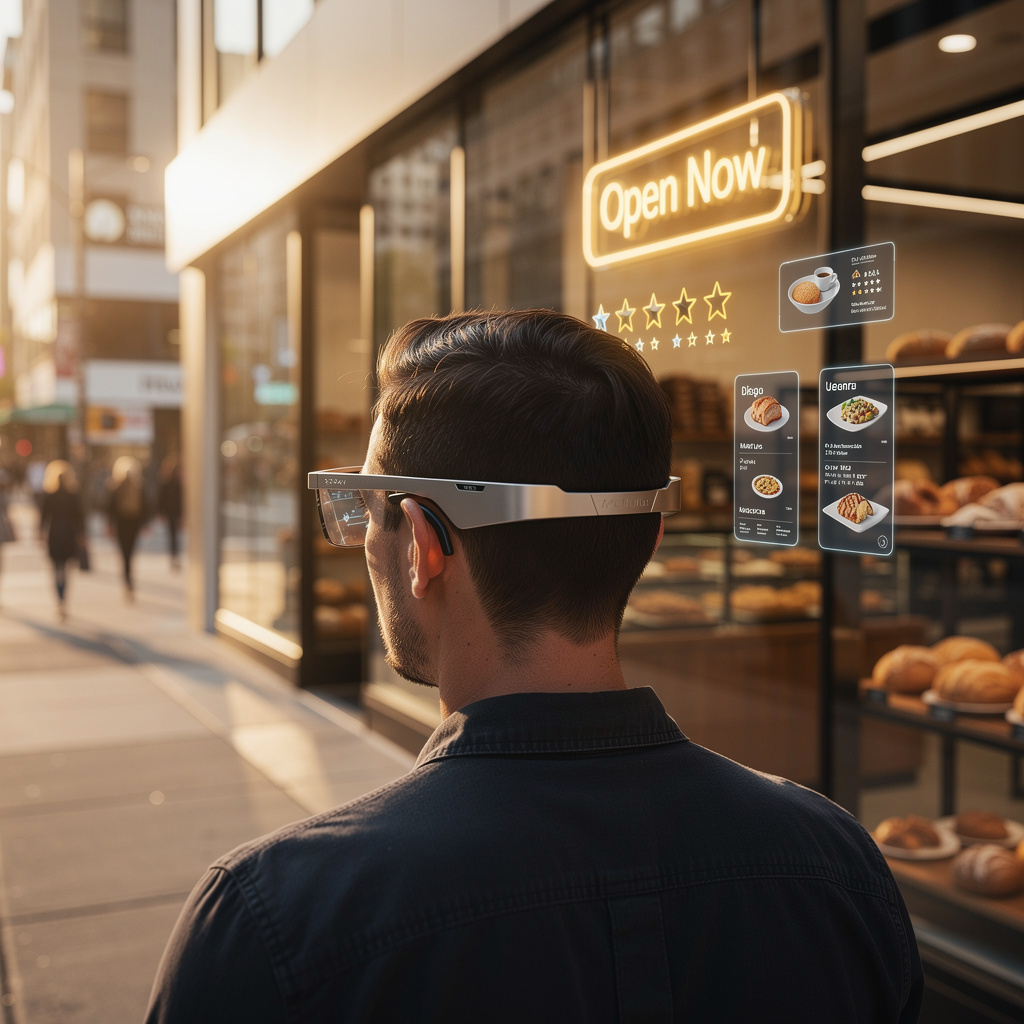
As AR glasses become the primary interface for daily life, brands must transition from keyword-focused content to spatial indexing and visual metadata to stay visible in a heads-up world.
The Shift from Query to Context: The Dawn of Heads-Up Discovery
For decades, SEO was a discipline of text and intent—matching a typed string to a relevant webpage. As we move deeper into the mid-2020s, that paradigm has shattered. With the mass adoption of lightweight, all-day AR glasses and the integration of high-fidelity visual sensors into every mobile device, the internet is no longer something we 'go to'; it is an invisible layer woven into our physical reality.
We have entered the era of Spatial SEO. This isn't just about ranking for a keyword; it is about ensuring your brand is indexed within the physical geometry of the world. In this new ecosystem, search engines like Google Lens 3.0 and Apple’s Visual Intelligence Engine don't just read your website; they scan the world, recognize objects, and serve information based on what a user is looking at in real-time.
Understanding the Visual Positioning System (VPS)
The backbone of Spatial SEO is the Visual Positioning System (VPS). Traditional GPS is no longer precise enough for the immersive web, which requires centimeter-level accuracy to anchor digital information to physical objects.
To optimize for VPS, brands must treat their physical locations as 'spatial sitemaps.' This involves ensuring that your storefront, products, and signage are easily recognizable by computer vision algorithms.
- Actionable Tip: Register your physical premises with high-resolution 3D scans (digital twins) via Google Business Spatial or Apple Maps Connect. These scans help visual search engines create a 'point cloud' of your business, ensuring that when a user looks at your door, your digital overlay appears without latency.
Semantic Scene Understanding: Beyond Metadata
In the traditional web, we used Alt-text to tell Google what an image represented. In 2026, Semantic Scene Understanding allows AR glasses to identify objects, textures, and even brand logos without any text-based assistance. However, you can still gain a competitive edge by optimizing the 'Visual Metadata' of your physical and digital assets.
Optimizing Physical Assets
- Distinctive Visual Signatures: Ensure your logos and storefronts have high-contrast features that are easily discernible in low-light or high-glare environments.
- Object Schemas: For retailers, every physical product on a shelf should have a corresponding 3D model (using the USDZ or glTF format) indexed in your product feed. This allows a user to 'glance' at a product and immediately see reviews, pricing, or virtual try-on options via their AR display.
The Geospatial Web and Anchored Content
Spatial SEO requires a shift from 'site-wide' content to 'anchored' content. An anchored experience is a piece of digital information tied to a specific geographic coordinate. For example, a restaurant might anchor a 'live holographic menu' to their sidewalk patio, or a clothing store might anchor a 'virtual fashion show' to their window display.
Strategic Takeaways for Geolocation:
- Local Spatial Hubs: Create 'hubs' of digital content that trigger when a user is within 50 meters of your location. This could include real-time wait lists, exclusive AR-only discounts, or immersive brand storytelling.
- Spatial Backlinks: Just as websites link to each other, physical spaces can now 'link' to others. Partnering with nearby businesses to co-host AR experiences can boost your 'spatial authority' in a specific neighborhood.
Technical Requirements: The New Stack
To rank in the spatial index, your technical SEO team must expand their toolkit. The 'Blue Link' is now a legacy format; the 'Spatial Entity' is the new standard.
- WebXR and OpenSpatial Standards: Ensure your immersive content is built on open standards. Proprietary 'walled garden' AR apps are being deprioritized by search engines in favor of WebXR experiences that can be indexed and launched directly from a visual search result.
- Scene Graph Optimization: Much like page speed, the 'load time' of your 3D assets is a ranking factor. Optimize your scene graphs to ensure that 3D overlays materialize instantly as the user turns their head.
- Entity-Based Schema: Use the latest Schema.org extensions for
SpatialEntityandVisualProduct. This structured data tells the search engine exactly which 3D model corresponds to which physical SKU.
Predictive Intent in a Heads-Up World
Search in 2026 is moving from reactive to predictive. AR glasses track eye movement and dwell time. If a user lingers on a pair of sneakers in a window display, the spatial engine interprets this as 'high intent.'
As a brand, you must optimize for these Micro-Signals. This means providing 'Glanceable Content'—information that is low-friction and high-value. If your spatial overlay is too cluttered or takes too many gestures to interact with, the search engine will de-rank your experience in favor of a more streamlined competitor.
The Role of Privacy and Trust in Spatial Indexing
With glasses constantly scanning the environment, privacy is a major concern. Search engines now prioritize 'Zero-Knowledge' spatial data. Brands that can prove their AR experiences are privacy-compliant and don't harvest biometric data from users will see a 'Trust Boost' in spatial rankings.
- Pro Tip: Implement 'Spatial Opt-In' zones. Clearly define where your digital overlays begin and end, and ensure that users have total control over what information they see and share within your brand’s physical-digital footprint.
Conclusion: The Future is Overlay-First
The transition to Spatial SEO represents the most significant shift in digital marketing since the move to mobile-first indexing a decade ago. In 2026, visibility is no longer about being at the top of a page; it is about being at the center of a user’s field of vision.
By focusing on VPS registration, high-fidelity 3D modeling, and low-latency WebXR delivery, your brand can claim its territory in the augmented landscape. The companies that will win this decade are those that stop thinking in terms of 'pages' and start thinking in terms of 'presence.'
Ready to Scale Your Brand?
Our team of experts can help you implement these insights and drive real results.