Generative Engine Optimization (GEO) in 2026: How to Rank Inside AI Search Answers
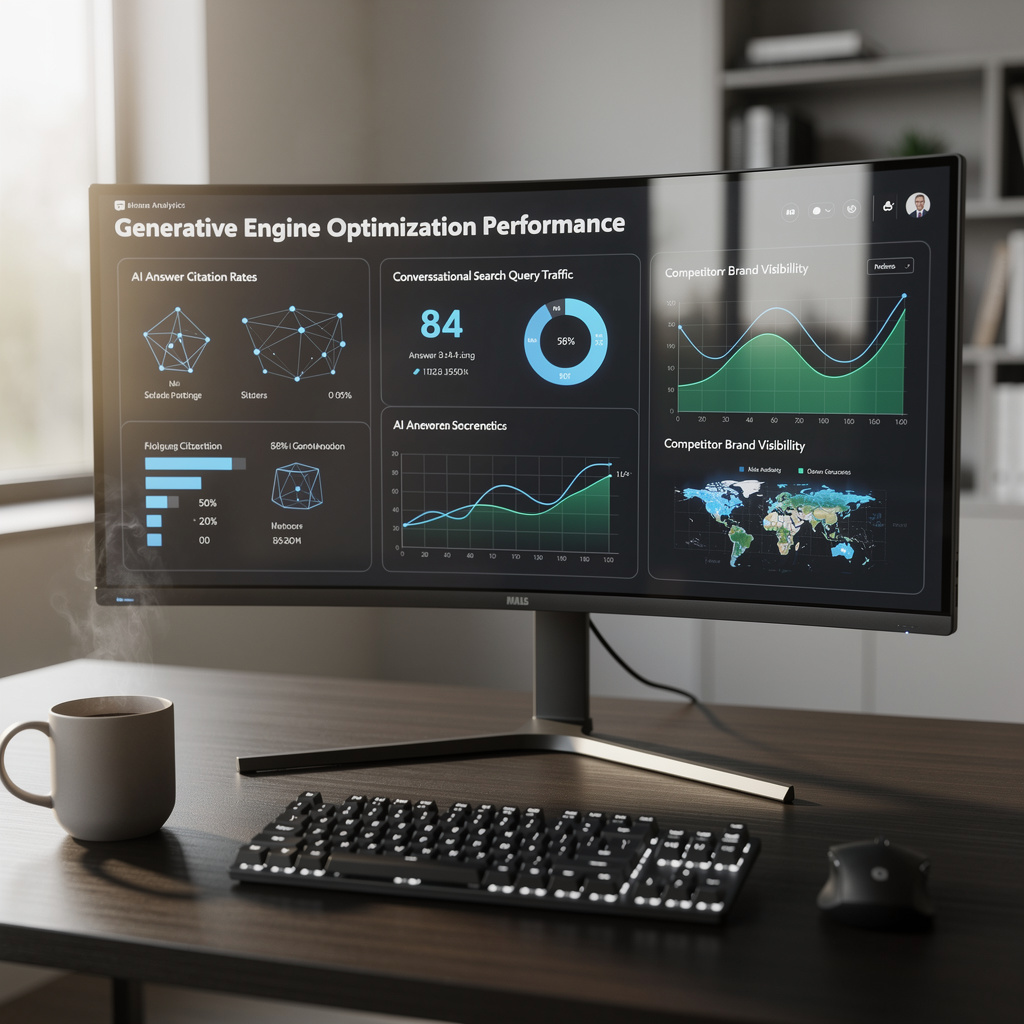
Discover how search algorithms have evolved in 2026 beyond traditional blue links into AI answer engines, and master the exact framework needed to make your brand the primary source in generative search summaries.
The landscape of organic search has undergone a fundamental paradigm shift. The familiar 'ten blue links' that governed digital marketing for over two decades have been eclipsed by real-time synthesis engines, conversational agents, and zero-click answer boxes. Generative Engine Optimization (GEO) is no longer an emerging experiment; it is the core discipline required to maintain brand visibility, authority, and pipeline in a synthetic digital ecosystem.
Traditional search engines indexed pages and matched keywords; generative search engines ingest concepts, evaluate credibility across trusted nodes, and construct personalized answers on the fly. To rank today, your content must not merely exist to be indexed—it must be structured to be synthesized.
The Mechanical Shift: How Generative Engines Process Content
To optimize for generative engines, digital strategists must understand the mechanics of Retrieval-Augmented Generation (RAG). When a user submits a complex query, generative search engines do not perform a simple database query. Instead, they execute a multi-step pipeline:
- Query Decomposition and Intent Mapping: The engine breaks down user queries into sub-intents, identifying explicit facts, implied needs, and contextual background.
- Vector Retrieval & Chunking: The system scans vast vector databases to pull content 'chunks' (typically 100 to 300 words) that exhibit high semantic similarity to the query components.
- Fact Verification and Consensus Checking: The LLM cross-references retrieved chunks against high-authority knowledge bases and consensus nodes to filter out hallucinated or contradictory information.
- Generative Synthesis & Citation: The model synthesizes the verified chunks into a natural language response, embedding direct citations and source cards for the top contributing inputs.
If your content is buried in fluff, lacks structural clarity, or offers no unique information gain, the vector retrieval step will pass it over entirely.
The Core Pillars of Generative Engine Optimization
Winning prime real estate inside AI answer cards requires moving past keyword density and backlink volume. Instead, execution relies on four foundational pillars of GEO.
1. High Information Gain and First-Party Data
Generative engines actively deprioritize rehashed content. If your article merely summarizes existing top-ranking pages, an AI engine can generate that summary without referencing your domain. To force citation, content must supply novel Information Gain:
- Proprietary Research: Publish benchmark studies, original surveys, and internal performance metrics.
- Expert Methodologies: Share unique frameworks, proprietary processes, and named strategic models.
- Direct Quotes and Case Evidence: Include first-hand experiences, concrete outcomes, and verbatim expert quotes that cannot be replicated elsewhere.
When an AI model encounters unique statistics or named frameworks, it is statistically compelled to cite the originating source to maintain factual accuracy.
2. Semantic Atomization and Structural Formatting
Large language models read content through tokens and context windows. Long-winded, narrative-heavy text creates unnecessary noise. Content must be 'atomized'—broken into modular, self-contained, and easily digestible blocks.
- Declarative Summaries: Begin key sections with a concise, direct takeaway (20–40 words) that explicitly answers a query before diving into deeper explanations.
- Data Tables and Structured Lists: LLMs process structured data efficiently. Use HTML tables for comparisons, feature matrices, and numerical breakdowns.
- Clear Heading Hierarchy: Maintain strict sequential nesting (
##,###,####). Headings should function as clear topic descriptors rather than creative or cryptic teasers.
3. Entity Building and Cross-Web Consensus
AI engines rely heavily on Knowledge Graphs to determine authority. Your brand, executives, and core offerings must exist as clear, recognized entities.
- Third-Party Validation: Ensure your brand is cited consistent with its core competencies across industry publications, review platforms, and digital encyclopedias.
- Consensus Alignment: AI engines favor statements that align with verified expert consensus while presenting clear data for novel counter-arguments.
- Deep Schema Implementation: Implement advanced JSON-LD structured data, including
TechArticle,ProfilePage,ClaimReview, and detailedOrganizationgraphs with explicitsameAsreferences.
4. Syntactic Directness and Quotable Authority
Generative engines prefer extracting text that requires minimal rewriting to fit an answer context. Writing with clarity and high semantic density vastly improves extraction rates.
- Active, Assertive Language: Write in direct, authoritative prose. Avoid passive, qualifying language like 'It is often believed that...' or 'Some experts suggest...'
- Definitional Clarity: Use explicit syntax when defining terms: "[Term] is defined as [X] through the mechanism of [Y] to achieve [Z]."
A Step-by-Step GEO Execution Checklist
Transform your content strategy into a generative-first engine with this practical workflow:
- [ ] Audit for Information Gain: Review existing high-traffic pages. Identify generic summaries and replace them with proprietary data points, proprietary charts, or expert interviews.
- [ ] Implement 'TL;DR' Summaries: Place concise, bulleted answer blocks directly beneath H2 headings to give RAG engines immediate source material.
- [ ] Optimize for Conversational Prompts: Target natural-language, long-tail queries (e.g., "How do I calculate customer acquisition cost for enterprise SaaS using multi-touch attribution?") alongside transactional terms.
- [ ] Enhance Entity Association: Ensure your brand name is consistently linked alongside your core industry keywords across external guest contributions, PR campaigns, and podcast appearances.
- [ ] Monitor Citation Ecosystems: Track which AI platforms cite your brand using generative monitoring tools to analyze share of voice across major conversational models.
Measuring Success in the Generative Search Era
Traditional SEO metrics like keyword rankings and raw organic click-through rates no longer tell the full story. As zero-click generative answers increase, success must be measured through new performance indicators:
- Share of Model Voice (SoMV): The percentage of generative responses in your sector that feature or cite your brand compared to competitors.
- Citation Frequency: How often your domain appears as a direct reference link within AI-generated summaries for key commercial intents.
- Referral Conversion Rate: While raw referral volume from AI answers may be lower than traditional SERP clicks, traffic arriving via citation cards converts at a significantly higher rate due to the explicit validation provided by the answer engine.
Looking Ahead: The Agentic Web
As search evolves toward autonomous AI agents capable of executing multi-step research and purchasing workflows, GEO will transition from answering queries to guiding decisions. Brands that build structured, highly verified, and data-rich content environments will become the default engine for these digital agents, securing their place as category leaders for years to come.
Ready to Scale Your Brand?
Our team of experts can help you implement these insights and drive real results.