Spatial SEO: How to Optimize Your Local Brand for AR Smart Glasses in 2026
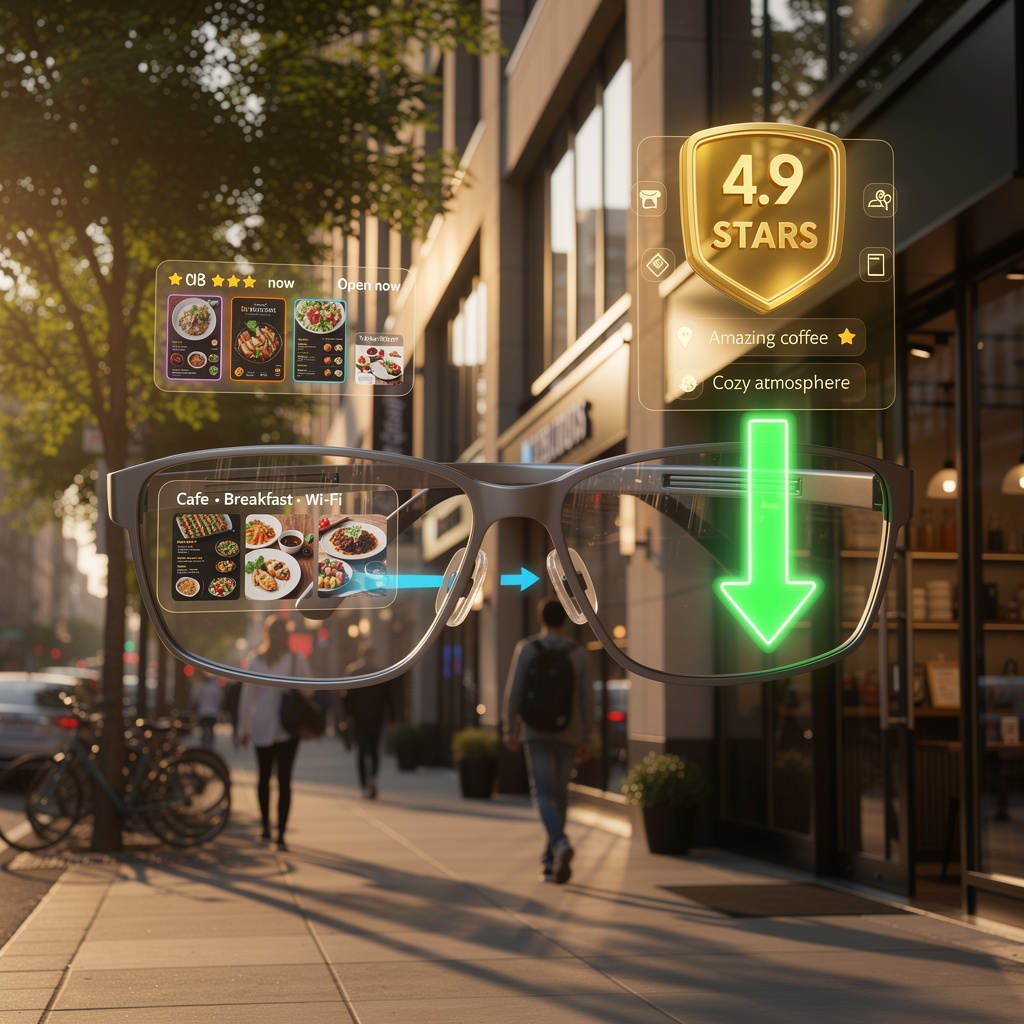
As augmented reality glasses become everyday wear in 2026, local search is shifting directly into the physical world. Discover the essential strategies to optimize your brand for real-time spatial SEO and AR search displays.
Spatial SEO: How to Optimize Your Local Brand for AR Smart Glasses in 2026
Category: SEO
Tags: Spatial SEO, AR Marketing, Local SEO, Emerging Tech
The era of the "blue link" has officially expanded. With lightweight, stylish augmented reality (AR) smart glasses now a common accessory on streets worldwide, the digital and physical worlds have permanently merged. Consumers no longer pull out phones to find a place to eat, shop, or visit; they simply look around.
In this new paradigm, search results are not displayed on a flat screen. Instead, they are rendered as dynamic, three-dimensional visual overlays directly on physical storefronts, streets, and products. This shift has birthed a critical new discipline: Spatial SEO.
If your local brand is not optimized for spatial indexing, you are invisible to millions of consumers navigating the physical world with heads-up displays. Here is how to master this cutting-edge search landscape and ensure your physical location stands out in the AR viewfinder.
Understanding the Mechanics of Spatial Search
Traditional local search relies heavily on GPS coordinates, keyword matching, and review signals. While these still matter, spatial search engines run on a vastly different technical infrastructure.
1. The Visual Positioning System (VPS)
While GPS can pinpoint a user within a few meters, smart glasses require centimeter-level accuracy to overlay graphics perfectly onto a building. This is achieved via Visual Positioning Systems (VPS). VPS uses computer vision to match the live camera feed of a user's smart glasses with a pre-mapped 3D point cloud of the world.
2. Spatial Entity Matching
Search engines now map digital entities (like your Google Business Profile or Apple Maps listing) directly to physical structures. When a user looks at your storefront, the spatial search engine matches the physical architectural features (your facade, signage, and windows) with its visual database to determine exactly which business they are viewing.
3. Contextual Intent Engines
AR glasses continuously analyze user behavior—eye-gaze duration, walking speed, time of day, and biometric indicators (like heart rate or pupil dilation)—to predict search intent. A user lingering outside a cafe at 8:00 AM will see a completely different set of AR recommendations than someone walking briskly past at 8:00 PM.
The Core Pillars of Spatial SEO Optimization
To ensure your brand appears prominently in the AR lenses of passing consumers, you must optimize across several new spatial search factors.
Coordinate Precision and Elevation Data
Standard latitude and longitude coordinates are no longer sufficient. If your business is located on the third floor of a shopping mall, or shares a multi-tenant building, traditional search engines struggle to place your digital presence.
- Actionable Step: Ensure your location data includes precise altitude and elevation markers (z-coordinate data) in your local schema markup. Implement Geospatial Schema that explicitly states your shop’s level, suite number, and visual access points.
3D Digital Twin and Façade Optimization
Because spatial search relies on computer vision, the physical appearance of your storefront is literally a search ranking factor. Search crawlers (such as mapping vehicles and user-generated visual uploads) continually index the "visual signature" of your building.
- Actionable Step: Claim and verify your business on spatial mapping platforms. Submit high-definition, 360-degree imagery of your storefront in various lighting conditions (day, night, overcast, sunny). Keep your physical signage clean, unobstructed, and highly recognizable to computer vision algorithms.
Standardizing 3D Asset Deployment
If a user looks at your restaurant menu or boutique window, they should be able to pull up interactive 3D models of your offerings right in their field of view.
- Actionable Step: Optimize your product inventory using industry-standard 3D formats such as USDZ (highly integrated with Apple systems) and GLB/gTF (supported by Google and Meta). Use Product 3D Schema markup on your website to tell search engines that interactive assets are available for indexing. For example:
{
  "@context": "https://schema.org/",
  "@type": "Product",
  "name": "Artisanal Leather Messenger Bag",
  "image": "https://example.com/images/bag.jpg",
  "offers": {
    "@type": "Offer",
    "price": "120.00",
    "priceCurrency": "USD"
  },
  "subjectOf": {
    "@type": "3DModel",
    "encodingFormat": "model/gltf-binary",
    "contentUrl": "https://example.com/assets/bag.glb"
  }
}
Optimizing for Real-Time "Live" Overlays
Spatial SEO is hyper-dynamic. Users wearing smart glasses expect real-time information projected onto their surroundings. To win this real-time attention game, you must maintain active data feeds.
Dynamic Storefront Overlays
When a user gazes at your restaurant, they should instantly see your current wait time, table availability, and daily specials floating near your entrance.
- The Strategy: Integrate your point-of-sale (POS) and reservation systems with your local search profiles. APIs from platforms like OpenTable, Resy, or Shopify must feed real-time inventory and availability data directly to visual engines.
Spatialized Reviews and UGC
User-generated content is no longer a static list of text and photos on a screen. With smart glasses, customers can leave "spatial sticky notes"—reviews, videos, or virtual tips—physically pinned to specific areas inside your establishment.
- The Strategy: Encourage customers to leave AR-tagged reviews. Offer interactive incentives for visitors who use visual mapping apps to leave spatial tips (e.g., "Leave a virtual tip highlighting your favorite seat to unlock a 10% discount on your next visit"). Monitor these spatial overlays closely to maintain high-quality brand representation.
The Spatial SEO Checklist for Local Brands
To stay ahead of the curve as AR smart glasses become the primary interface of daily life, execute the following playbook:
- Audit Your Visual Footprint: Walk past your business wearing standard AR hardware. See how search engines currently render your brand. Are your hours correct? Does your physical sign match the digital card?
- Verify Your Spatial Listings: Register and update profiles on Google’s Geospatial Creator, Apple Maps Connect, and Meta’s Spatial Directory.
- Optimize Storefront Accessibility: Keep your physical entryways clear of obstructions. The cleaner your architectural silhouette, the easier it is for a VPS system to match and overlay your digital credentials.
- Publish 3D/AR Menus and Catalogs: Give users a reason to engage. Let them preview a 3D model of your signature dish or see how a piece of furniture looks in scale before they walk through your doors.
Looking Ahead: The Near Future of Visual Commerce
As spatial mapping systems become more sophisticated toward the late 2020s, expect visual search platforms to introduce predictive spatial advertising. Brands will soon bid on "visual real estate"—such as virtual billboard spaces projected on nearby neutral walls or high-traffic pedestrian paths.
By laying the groundwork today with precise schema, verified spatial profiles, and robust 3D assets, you ensure your local brand is not left in the dark as consumers shift their gaze from the screens in their hands to the interactive world around them.
Ready to Scale Your Brand?
Our team of experts can help you implement these insights and drive real results.