Spatial Branding: How to Optimize Your Brand Identity for the 2026 Mixed Reality Web
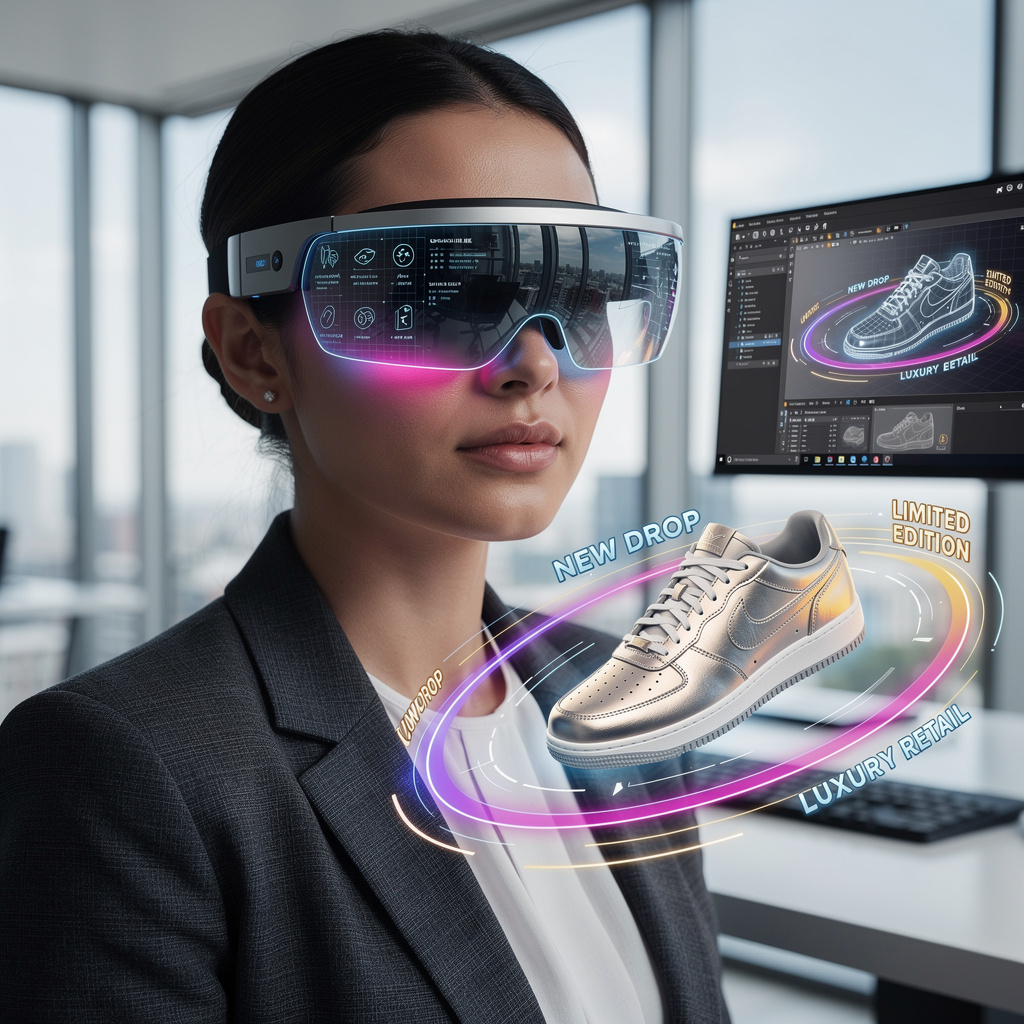
With the mass adoption of mixed reality headsets in 2026, traditional 2D branding is evolving into immersive 3D experiences that redefine how customers interact with your business.
The Post-Screen Paradigm: Why Presence is the New Conversion
As we navigate the middle of this decade, the digital landscape has undergone its most significant shift since the introduction of the smartphone. The 'Mixed Reality Web' is no longer a niche playground for early adopters; it is the primary interface through which millions of consumers interact with the world. With the ubiquity of lightweight, high-fidelity spatial glasses and the seamless integration of passthrough technology into our daily routines, the concept of a 'website' has been replaced by 'brand environments.'
In 2026, brand identity is no longer restricted to a flat, 2D plane. It has weight, depth, sound, and a physical presence in a user’s living room or workspace. This is the era of Spatial Branding, where the goal is no longer just to capture attention, but to command presence.
1. From Vector Logos to Volumetric Signatures
For decades, the cornerstone of brand identity was the vector logo. Today, a logo that only works in 2D is a liability. Modern brands are developing Volumetric Signatures—3D assets that serve as the anchor for mixed reality experiences.
These signatures are more than just extruded shapes. They include:
- Materiality and Physics: How does your brand object react to virtual light? Does it have the weight of polished obsidian or the airy bounce of a synthetic polymer? In a spatial environment, the way an object moves defines its personality.
- Environmental Interaction: Your volumetric logo shouldn't just sit there. It should interact with the user's physical furniture. Imagine a brand mark that rests on the user's actual coffee table, casting a realistic shadow that aligns with the real-world light sources in the room.
- LOD (Level of Detail) Scalability: Brands must ensure their assets are optimized for everything from high-end MR headsets to lightweight AR spectacles using the latest USDZ or glTF 3.0 standards.
2. The Rise of Sonic and Haptic Brand DNA
When a user enters a brand’s spatial domain, visual identity is only half the battle. In 2026, Spatial Audio is the primary driver of immersion. Traditional 'jingles' have evolved into 'Sonic Architecture.'
Actionable Takeaway: Develop a soundscape that triggers when a user enters your brand's spatial proximity. This shouldn't be intrusive background music, but a subtle 'room tone' that signals a change in atmosphere. Use directional audio to guide users toward specific product interactions.
Furthermore, with the latest generation of haptic gloves and ultrasonic mid-air haptic arrays, users can now 'feel' digital interfaces. A luxury brand should feel smooth and resistant, while a tech brand might feel crisp and haptically 'clicky.' Defining your brand’s Haptic Profile is now as important as choosing a color palette.
3. The 'Ambient Web' and Passthrough Contextualization
The Mixed Reality Web thrives on 'Passthrough,' where digital elements are overlaid on the physical world. This presents a unique challenge: your brand must look good in everyone's home, regardless of their interior design.
Adaptive Branding is the solution. Using AI-driven design tokens, brands in 2026 are using systems that automatically adjust their color saturation, luminosity, and even scale to complement the user's physical environment. If a user is in a dimly lit, minimalist office, your brand assets should subtly dim and refine their edges to avoid visual 'noise' and maintain a premium feel.
4. Redefining the Brand Style Guide: The Spatial Playbook
The PDF brand guides of the past are obsolete. The 2026 Spatial Playbook is a living repository of 3D assets, shaders, and interaction logic.
Your new brand guide must include:
- Gaze-Triggered Behaviors: What happens when a user looks at an object for more than two seconds? Does it expand? Does it whisper a product benefit?
- Gesture Language: Does your brand use 'pinch-and-drag' for navigation, or does it favor more organic, hand-tracking movements? Consistency in gesture is the new 'consistent typography.'
- Avatar Guidelines: How do your brand ambassadors or AI customer service agents look and move? Their 'Kinesics' (body language) must be coded to reflect brand values like 'approachable,' 'authoritative,' or 'innovative.'
5. Case Study: The 2026 Retail Revolution
Consider the recent success of AetherFlow, a boutique furniture brand. Instead of a 2D catalog, they launched a 'Spatial Showroom' on the WebXR 4.0 backbone. When users browse their site, they don't see images; they see life-sized, high-fidelity holograms of furniture.
By leveraging the Spatial Anchor API, AetherFlow allows customers to 'pin' a virtual sofa in their real living room for a week. The brand's identity is reinforced every time the user walks past the hologram. The 'conversion' happens because the brand has literally moved into the customer’s home before the purchase is even made.
6. Practical Steps for 2026 and Beyond
To optimize your brand for this new reality, marketing departments must shift their focus from 'graphic design' to 'experience architecture.'
- Audit Your Assets: Convert your primary brand elements into high-quality 3D models. Ensure they are optimized for real-time rendering engines like LumenSpace or AetherEngine.
- Invest in WebXR: Don't build walled-garden apps. The Mixed Reality Web lives in the browser. Ensure your spatial experiences are accessible via a simple URL, removing the friction of app downloads.
- Prioritize Privacy and Comfort: Spatial branding involves tracking eye movements and hand gestures. Be transparent about data usage. Ensure your MR overlays do not cause 'visual fatigue' or 'spatial claustrophobia' by over-cluttering the user's physical field of view.
- Prototype for Interactivity: Use 'Digital Twins' of your products that users can pull apart, resize, and interact with. In 2026, if a user can’t touch it, they don’t trust it.
Conclusion: From Impression to Immersion
We have moved beyond the age of 'impressions.' In the Mixed Reality Web of 2026, the metrics of success are Dwell Time and Spatial Engagement. Brands that continue to think in pixels will be invisible to a generation that thinks in volumes.
By embracing volumetric identity, sensory consistency, and adaptive design, you aren't just building a brand; you are building a world. The future of branding is not something you see on a screen—it is something you experience all around you.
Ready to Scale Your Brand?
Our team of experts can help you implement these insights and drive real results.